Driving an automatic car on a self-drive trip is convenient, especially when traveling long distances or navigating unfamiliar roads. However, an automatic transmission requires different handling from a manual vehicle. Simple mistakes can cause unnecessary wear, reduce fuel efficiency, or even damage the transmission.
Whether you are planning a Rwanda self-drive safari, Uganda road trip, or another long-distance journey, understanding what not to do with an automatic car can help you travel more safely and protect your rental vehicle.
1. Avoid shifting from Drive to Reverse while moving
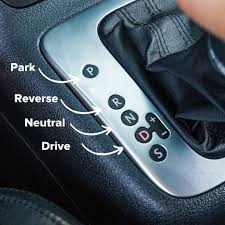
One of the most important rules when driving an automatic car is to come to a complete stop before changing between Drive (D) and Reverse (R).
For example, do not move the gear selector from D to R while the vehicle is still rolling forward. Always stop completely, keep your foot on the brake, and then select R.
Doing this repeatedly can place unnecessary stress on transmission components.
2. Do not shift into Park before stopping completely
Never select P (Park) while the vehicle is still moving.
Park is designed to hold a stationary vehicle. Selecting it while moving can cause serious mechanical stress and, depending on the vehicle, may damage the parking mechanism.
The correct sequence is:
Stop completely → keep your foot on the brake → select P → apply the parking brake.
3. Avoid using Neutral when going downhill
It may seem like putting the car in N (Neutral) while descending a hill will save fuel, but it removes engine braking and reduces your control over the vehicle.
On steep or winding roads, especially during a safari or mountain journey, remaining in an appropriate drive gear allows the vehicle to use engine braking and helps control speed.
Instead of continuously relying on the brakes, use the vehicle’s appropriate lower gear or drive mode where the manufacturer recommends it.
4. Do not rest your hand on the gear selector unnecessarily
While this may seem harmless, constantly resting your hand on the gear selector can result in accidental movement of the selector.
During a long self-drive journey, keep both hands available for steering when appropriate and avoid unnecessary interaction with the gear selector.
5. Avoid pressing the accelerator and brake at the same time
Using both pedals simultaneously can create unnecessary heat and wear.
This is particularly important when maneuvering slowly in traffic, parking, or navigating rough terrain. Use the brake to control the vehicle rather than trying to hold the vehicle stationary with the accelerator.
6. Don’t rely entirely on the accelerator on steep hills
When climbing a steep hill, avoid repeatedly flooring the accelerator unnecessarily.
Automatic transmissions may change gears as the vehicle responds to the gradient. If your vehicle has L, 2, 3, S, or a manual/selectable gear mode, use it according to the manufacturer’s instructions when additional engine control is needed.
This is particularly useful on steep roads encountered during safari trips.
7. Avoid speeding over potholes and rough roads
An automatic transmission does not make a vehicle immune to damage from poor roads.
When driving on gravel roads, potholes, corrugated surfaces, or rough safari tracks:
- Reduce your speed.
- Watch the road ahead carefully.
- Avoid sudden steering movements.
- Slow down before potholes rather than braking sharply inside them.
- Maintain a safe distance from other vehicles to improve visibility.
This is especially important when driving a rental 4×4 because suspension, tyres, wheels and underbody components can also be affected by rough terrain.
8. Do not overload the vehicle
Avoid carrying more passengers or luggage than the vehicle is designed to handle.
Overloading increases the strain on the engine, transmission, suspension, tyres and brakes. It can also increase stopping distances and make the vehicle less stable.
Before starting a long self-drive trip, distribute luggage evenly and make sure nothing obstructs the driver’s view.
9. Avoid aggressive acceleration
Sudden acceleration is unnecessary during most self-drive journeys.
Rapid acceleration can increase fuel consumption and place additional stress on the engine and transmission. Smooth acceleration is generally more comfortable for passengers and better suited to long-distance driving.
On safari roads, gradual acceleration also helps prevent unnecessary wheel spin on loose surfaces.
10. Don’t use cruise control carelessly on slippery roads
Cruise control can be convenient on suitable paved highways, but it should generally be avoided when roads are wet, muddy, icy, loose or otherwise slippery.
During a self-drive safari, road conditions can change quickly. You should maintain direct control of the accelerator and adjust your speed according to the road surface.
11. Avoid unnecessary gear changes
Modern automatic transmissions are designed to select gears automatically. There is usually no need to constantly switch between D, N and other modes during normal driving.
Let the transmission do its job unless you need a specific driving mode for conditions such as steep descents, difficult terrain or towing.
If the rental vehicle has unfamiliar controls, check the owner’s manual before using special modes.
12. Do not ignore warning lights
If the dashboard displays a transmission, engine, temperature, oil-pressure or other serious warning light, do not simply continue driving and hope that it disappears.
Safely stop when appropriate and contact the rental company or roadside assistance.
With a rental car, reporting a problem early can prevent a minor mechanical issue from becoming a major breakdown.
13. Avoid parking without applying the parking brake
When parking, don’t rely solely on the P position to hold the vehicle.
A better habit is:
Stop → apply the parking brake → select P.
This is particularly important when parking on a slope. The parking brake helps reduce the load placed on the transmission’s parking mechanism.
14. Don’t drive through deep water without checking the depth
A 4×4 automatic vehicle may be capable of handling water crossings, but that does not mean every automatic 4×4 should be driven through deep water.
Before entering a water crossing, assess:
- Water depth
- Current strength
- Road surface underneath
- Exit point
- Vehicle wading limit
- Weather conditions
Never assume that because another vehicle crossed successfully, your rental vehicle can safely do the same.
15. Avoid unnecessary wheel spin
When driving on mud, sand or loose gravel, aggressive acceleration can cause the wheels to spin.
Instead, use smooth throttle control and the appropriate driving mode if the vehicle has selectable terrain settings.
If the vehicle becomes stuck, avoid repeatedly flooring the accelerator. Excessive wheel spin can generate heat and place significant stress on the drivetrain.
16. Don’t tow another vehicle without permission
If you are driving a rental car, avoid using it to tow another vehicle unless the rental company specifically permits it and the vehicle is properly equipped for towing.
Towing can place additional loads on the engine, transmission, cooling system and brakes.
If another vehicle becomes stuck during your trip, it is usually safer to contact appropriate recovery services.
17. Avoid driving barefoot or with unsuitable footwear
Although this is not specific to automatic transmissions, footwear matters during self-drive trips.
Avoid footwear that can easily slip off or become trapped around the pedals. You need to be able to move quickly and accurately between the accelerator and brake.
18. Don’t drive when tired
Long-distance self-drive journeys can involve several hours behind the wheel, particularly when traveling between national parks.
Fatigue can slow your reaction time and affect your judgment. Take regular breaks, change drivers where permitted, and stop for the night when you are too tired to continue safely.
19. Avoid assuming every automatic car drives the same way
Automatic transmissions vary considerably.
A Toyota Land Cruiser, Land Cruiser Prado, RAV4, Suzuki Jimny, or another 4×4 may have different gear selectors, terrain modes, low-range systems and transmission controls.
Before leaving the rental office, familiarize yourself with:
- Gear selector positions
- Parking brake
- Four-wheel-drive controls
- Low-range selection
- Hill-descent control
- Differential-lock controls, if fitted
- Dashboard warning lights
- Fuel-door and bonnet release
- Spare tyre and jack location
This is particularly important when renting a 4×4 for a safari.
20. Avoid treating an automatic car like a manual
Perhaps the biggest mistake is trying to reproduce manual-driving habits in an automatic vehicle.
You don’t need to constantly shift gears, use a clutch, or hold the vehicle on a hill using the accelerator. Instead, allow the automatic transmission to work as designed and concentrate on smooth steering, appropriate speed and road awareness.
Final Tips for an Automatic Self-Drive Safari
An automatic vehicle can make a long self-drive journey much easier, but it still needs to be operated carefully. Stop completely before changing between Drive and Reverse, use the parking brake correctly, avoid unnecessary Neutral selection, slow down on rough roads, and respect the vehicle’s limits.
For a Rwanda self-drive safari, also pay close attention to changing road conditions. Paved highways may be smooth, while rural roads, mountain routes and safari tracks can require much slower and more careful driving. The safest approach is to drive according to the conditions rather than relying solely on the fact that the vehicle is an automatic 4×4.