
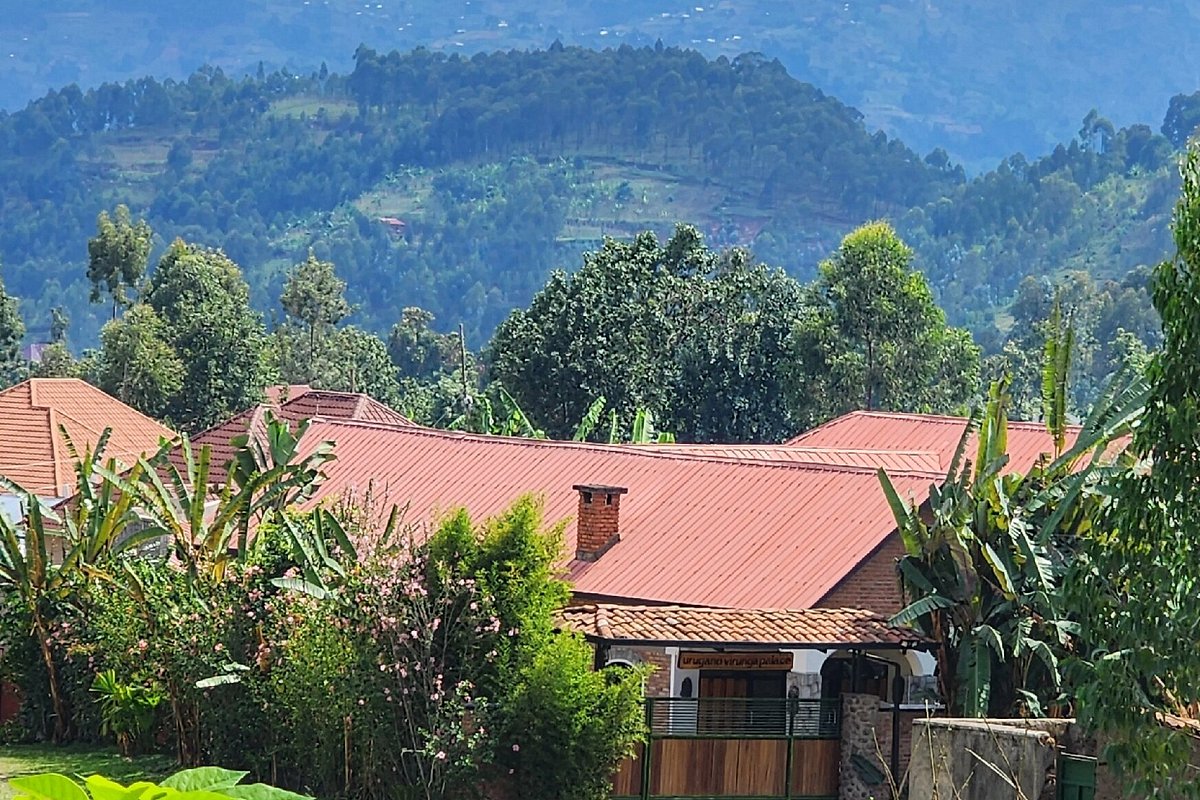
Road-trip photography/ 4×4 Rwanda Car Rentals
Rwanda is one of Africa’s best destinations for road-trip photography. The country’s winding roads pass through terraced hills, tea plantations, volcanic mountains, lakes, forests and savannahs, meaning there is usually something worth photographing along the way. A Rwanda self-drive trip is particularly rewarding because you can stop at scenic viewpoints instead of rushing from one destination to another.
1. Rulindo Tea Plantations
The tea-growing landscapes around Rulindo are an excellent early stop when driving north from Kigali toward Musanze. The neatly arranged tea fields cover the hillsides, creating strong patterns and natural lines that work well in landscape photographs.
Morning or late-afternoon light is ideal because the lower sun creates shadows across the rows of tea. If you see a safe roadside pull-off, take a few minutes to capture the surrounding hills and agricultural landscape.
2. The Twin Lakes of Burera and Ruhondo
The Twin Lakes are among the most impressive photography stops in northern Rwanda. The combination of deep blue water, steep cultivated hills, small fishing boats and the Virunga volcanoes creates excellent compositions.
Try to arrive early when possible. Morning mist can sit above the water while the volcanoes appear in the background. A wide-angle lens is useful for capturing the entire landscape, while a zoom lens can isolate boats, farms and mountain details.
3. The Volcanoes Around Musanze
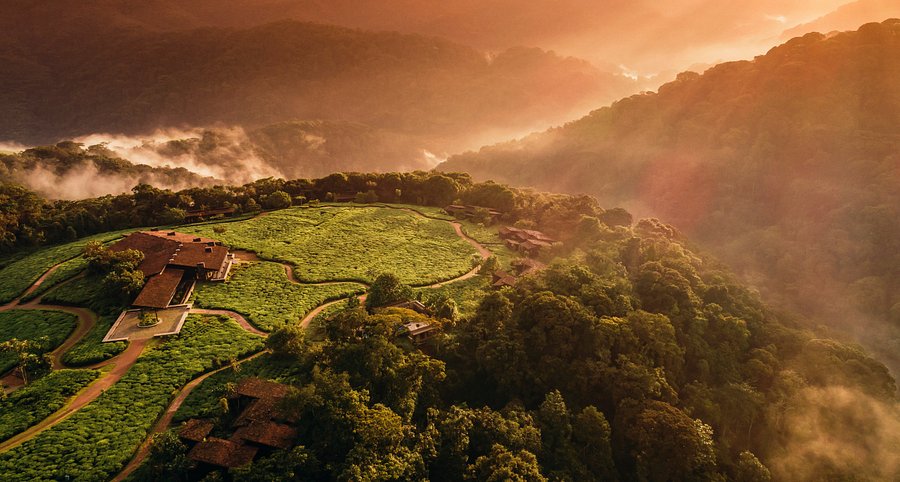 The road around Musanze provides some of Rwanda’s most recognizable mountain scenery. The Virunga volcanoes rise dramatically above the surrounding farmland, creating opportunities for photographs that combine mountains, villages and cultivated hills.
Early morning is generally preferable because clouds can build around the volcanoes later in the day. The constantly changing weather can also produce atmospheric photographs rather than simply clear mountain views.
4. The Descent Toward Lake Kivu
One of the most rewarding moments on a Rwanda road trip is the descent from the northern highlands toward Rubavu. As the road drops, Lake Kivu gradually appears below, creating a dramatic transition from mountain scenery to the lake.
Look for a safe viewpoint rather than stopping directly on the road. From higher elevations, you can photograph the lake, surrounding hills and distant landscape in a single frame.
5. Rubavu and Lake Kivu
Rubavu provides excellent opportunities for lakeside photography. Capture boats along the shoreline, fishermen, distant hills and the changing colours of the lake.
Late afternoon is particularly rewarding because the low light creates silhouettes and reflections across the water. Lake Kivu is also officially highlighted for its spectacular vistas, islands and inlets.
6. Karongi and the Lake Kivu Islands
Karongi, also known as Kibuye, is another must-stop location for photographers. The town sits beside a particularly scenic section of Lake Kivu, with small islands and surrounding hills providing depth to landscape photographs.
A boat trip gives you a different perspective. Instead of photographing the lake from land, you can capture the shoreline, islands, fishing boats and hills from the water.
7. Nyungwe Forest
As your road trip moves south, the landscape changes dramatically. The open hills and lake scenery give way to the dense rainforest of Nyungwe National Park.
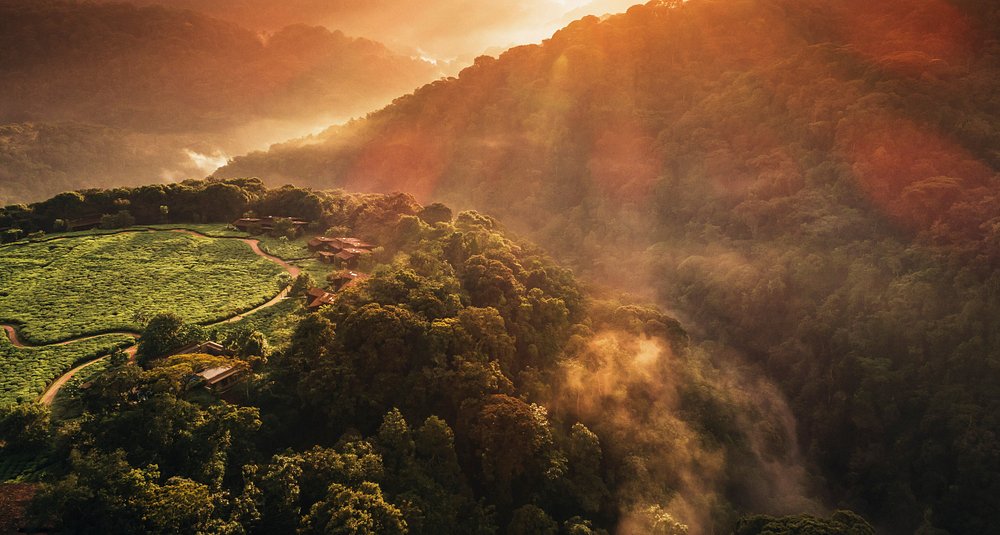 Nyungwe is ideal for photographing misty forest landscapes, giant trees, birds, primates and the intricate vegetation of the rainforest. The canopy experience also provides an elevated perspective over the forest.
The forest is particularly atmospheric in the early morning when mist and soft light create depth between the trees. Nyungwe is an ancient rainforest with exceptional biodiversity, including chimpanzees, primates, birds, orchids and butterflies.
8. Tea Plantations Around Gisakura and Gisovu
The tea plantations around the Nyungwe region deserve their own photography stop. The carefully shaped rows of tea follow the contours of the hills, creating beautiful geometric patterns.
You can photograph the plantations as landscapes or, where appropriate, capture workers harvesting tea. The contrast between the bright green plantations and surrounding forests makes this section of the journey particularly photogenic.
9. Akagera National Park
For wildlife and landscape photography, Akagera should be included in your Rwanda road trip. The park combines savannah, wetlands, woodland and numerous lakes, giving photographers a completely different environment from western and northern Rwanda.
During game drives, keep your camera ready for elephants, giraffes, buffalo, antelope, hippos, birds and other wildlife.
Mutumba Hills
Mutumba Hills is one of the best photography stops within Akagera. The elevated position provides panoramic views across the park’s lakes and savannah. The official Akagera National Park information specifically identifies it as a photography hotspot, with sunrise and sunset providing particularly good light.
Lake Ihema
 Lake Ihema offers another excellent photographic experience. A boat safari can bring you close to hippos, crocodiles and numerous bird species while providing views across the water and surrounding wetlands. Sunset over the lake is especially attractive.
10. Kigali’s Hills
Don’t finish your photography trip without photographing Kigali itself. Rwanda’s capital is spread across numerous hills, creating opportunities for elevated city views.
A sunset from one of the city’s higher viewpoints can capture the changing colours of the sky, city buildings and surrounding green hills. It is also a convenient option if you have limited time before leaving Rwanda.
Photography Tips for a Rwanda Road Trip
Carry both a wide-angle lens and a moderate zoom lens if possible. The wide lens is useful for mountains, lakes and sweeping landscapes, while the zoom is better for wildlife, boats and distant subjects.
The best light is usually around sunrise and sunset. During the middle of the day, strong overhead sunlight can make landscapes appear flat, although dramatic clouds can sometimes produce excellent photographs.
Most importantly, never stop your vehicle in an unsafe position simply to take a photograph. Use designated viewpoints, parking areas or safe roadside pull-offs. This is especially important on Rwanda’s winding mountain roads.
A Perfect Photography Road Trip
A strong photography-focused route could begin in Kigali, continue through the tea plantations toward Musanze, visit the Twin Lakes and Volcanoes, descend toward Rubavu and Lake Kivu, continue to Karongi and Nyungwe, and then finish with a wildlife photography experience in Akagera National Park.
This route gives you an incredible variety of subjects: cityscapes, tea plantations, volcanoes, lakes, fishing communities, rainforest, wildlife and savannah landscapes. Rwanda’s compact size makes it possible to experience this remarkable photographic diversity within one road trip.