
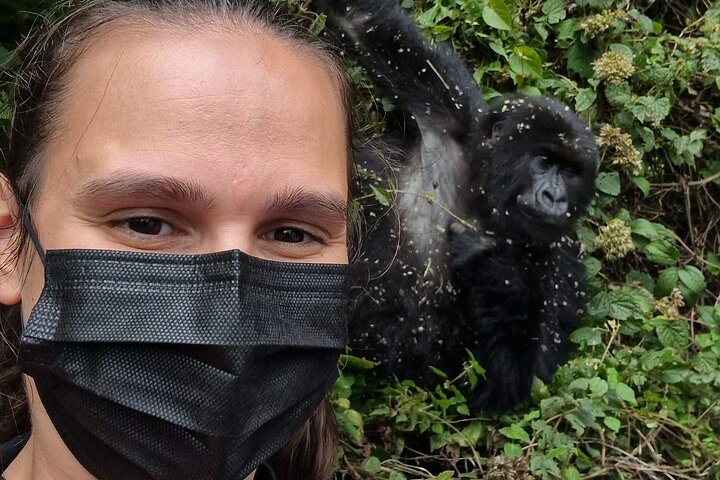
Gorilla trekking in Rwanda is one of Africa’s most remarkable wildlife experiences. Rather than watching animals from a safari vehicle, visitors hike through the misty forests and volcanic slopes of Volcanoes National Park in search of habituated mountain gorilla families. The experience combines wildlife, hiking, conservation and dramatic mountain scenery, making it one of the most distinctive activities on a Rwanda safari.
Volcanoes National Park is located in northwestern Rwanda within the Virunga Mountains. The gorillas live at high elevations, and the trek can take anywhere from around 30 minutes to more than four hours depending on the location and movements of the gorilla family allocated to your group.

Where Is Gorilla Trekking Done in Rwanda?
Rwanda’s gorilla trekking takes place in Volcanoes National Park, commonly known as Parc National des Volcans. The park forms part of the Virunga mountain ecosystem, which extends across Rwanda, Uganda and the Democratic Republic of Congo.
The landscape is dominated by volcanic mountains, bamboo forests, montane vegetation and steep slopes. The combination of high altitude and dense vegetation makes the trek physically different from a conventional savannah game drive.
The park is also relatively accessible from Kigali, making it possible to include gorilla trekking even on a shorter Rwanda itinerary.
Most visitors base themselves around Musanze or Kinigi, with Kinigi being particularly convenient because it is close to the park headquarters.
What Makes Rwanda Gorilla Trekking Special?
The biggest attraction is the opportunity to observe mountain gorillas in their natural environment.
Instead of seeing the animals behind fences or in a zoo, trekkers enter the forest with trained guides and trackers. The gorillas continue with their normal activities while visitors observe from a regulated distance.
You may see adults feeding, mothers caring for infants, young gorillas playing, individuals grooming one another or a dominant silverback watching over the group.
The forest environment is equally important. The trek takes you through a landscape of bamboo, dense vegetation, volcanic slopes and misty mountain scenery.
How Does a Gorilla Trek Begin?
Gorilla trekking starts early in the morning.
Visitors report to the designated park registration and information centre at approximately 7:00 a.m. for registration and briefing.
During the briefing, guides explain the trekking procedures, safety requirements and rules for interacting with the gorillas.
Visitors are then assigned to trekking groups and a gorilla family.
This allocation is important because gorilla families move through the forest. The location of the family can determine whether your hike lasts less than an hour or several hours.
The Hike Through Volcanoes National Park
Once the group leaves the briefing area, the actual trek begins.
The difficulty of the hike varies considerably. Some gorilla families may be relatively close to the trailhead, while others may have moved deeper into the forest.
The official Rwanda tourism information indicates that treks can take approximately 30 minutes to four hours or more, with gorillas living at elevations between approximately 2,500 and 4,000 metres.
The terrain can be steep and muddy, particularly after rain. You may need to walk through thick vegetation and negotiate slippery sections.
This is why good physical preparation and appropriate clothing are important.
Tracking the Gorilla Family
You will not simply walk through the forest randomly looking for gorillas.
Experienced trackers monitor the gorilla groups and communicate their location to the guides. Once the general location is established, your group follows the appropriate trail.
The trackers may sometimes move ahead of the visitors to locate the animals.
The anticipation is an important part of the experience. You might hear vegetation moving before you see the gorillas, or suddenly encounter a family feeding quietly only a few metres away.
Meeting the Gorillas
When the gorilla family is located, your guide will explain where you should stand and how to behave.
The encounter is carefully regulated. Rwanda currently limits the viewing period to one hour, with a maximum of eight visitors per gorilla group. Visitors are also instructed to maintain a distance of approximately seven metres from the gorillas.
The gorillas may move closer despite the recommended distance. If that happens, visitors should remain calm and follow the guide’s instructions rather than attempting to move toward or touch the animal.
What Can You See During the Encounter?
There is no fixed script for a gorilla encounter.
One family might be feeding quietly when you arrive, while another might be particularly active.
Possible behaviours include:
- Feeding
- Grooming
- Resting
- Playing
- Climbing
- Moving through vegetation
- Caring for infants
- Vocalising
- Interacting with other members of the group
The silverback often attracts considerable attention because of its size and distinctive appearance, but every member of the family contributes to the experience.
Young gorillas can be particularly entertaining because of their playful behaviour.
Rwanda Gorilla Trekking Permit Cost
For international visitors, the standard gorilla trekking permit is currently US$1,500 per person. The minimum age for gorilla tracking is 15 years.
Rwanda also has special categories for eligible Rwandan citizens, East African citizens, African citizens and certain foreign residents. The exact promotional rates and eligibility conditions can vary by travel period.
For example, the current Rwanda Development Board booking system lists special rates, but notes that some promotional rates are not applicable from June through October 2026.
Therefore, travellers should check the official booking system for the applicable rate for their travel dates rather than relying on older safari articles.
How to Book a Gorilla Permit
Gorilla permits can be booked through Rwanda’s official tourism booking system, and travellers can also arrange them through licensed tour operators.
Advance booking is strongly recommended because the number of visitors per gorilla group is restricted.
The official booking system states that reservations are handled on a first-come, first-served basis and that gorilla tracking can be booked in advance.
When booking, make sure the names and identification details match the documents you will use for the trek.
Incorrect or incomplete applications can result in problems at the park entrance.
Best Time for Gorilla Trekking in Rwanda
Gorilla trekking is possible throughout the year.
However, weather can influence the difficulty of the hike. Rwanda’s mountain forests can receive rain even during periods that are relatively dry elsewhere in the country.
During wetter conditions, trails can become muddy and slippery. On the other hand, the forest becomes particularly lush and green, creating excellent scenery for photography.
Travellers should therefore prepare for rain regardless of their travel month.
What to Wear for Gorilla Trekking
Proper clothing is one of the most important aspects of preparing for the trek.
Rwanda’s official tourism guidance recommends sturdy walking shoes, gaiters and strong clothing that protects against vegetation and stinging nettles. A lightweight waterproof jacket is also recommended.
A practical outfit includes:
- Waterproof hiking boots
- Long trousers
- Long-sleeved shirt
- Lightweight rain jacket
- Gaiters
- Gardening or leather gloves
- Hat
- Comfortable socks
- Small backpack
Avoid wearing shorts unless you are comfortable with exposed legs in dense vegetation.
What to Pack
Your backpack should be relatively light because you may have to carry it for several hours.
Useful items include:
- Drinking water
- Small snacks for the hike
- Camera
- Extra batteries
- Power bank
- Waterproof bag
- Rain jacket
- Sunscreen
- Insect repellent
- Tissues
- Personal medication
- Binoculars
Food and drinks should not be consumed while you are directly observing the gorillas. Follow the instructions provided by your guide.
Hiring a Porter
First-time trekkers should seriously consider hiring a porter.
Porters can carry your backpack and camera equipment and can also provide assistance on difficult sections of the trail.
Beyond convenience, hiring a porter provides direct income to people living around the park and allows visitors to contribute to the local tourism economy.
The official Rwanda booking information confirms that porters are available for trekkers.
How Physically Difficult Is Gorilla Trekking?
Gorilla trekking is physically demanding, although the difficulty varies greatly between groups.
The high altitude can make the trek more challenging than the distance alone suggests.
Steep slopes, thick vegetation, mud and changing weather can also increase the difficulty.
You do not need to be an elite athlete, but it is sensible to prepare by walking regularly before your trip.
If you are concerned about your fitness, discuss this with your tour operator and guide before the trek.
Gorilla Trekking Rules
The rules are designed to protect both the visitors and the gorillas.
Important rules include maintaining the required distance, keeping your voice low, avoiding sudden movements and following the guide’s instructions.
Visitors should never attempt to touch, feed or provoke the gorillas.
Rwanda’s official guidelines also prohibit littering and spitting and advise visitors who are sick with contagious illnesses not to participate.
These rules are particularly important because humans and gorillas can transmit certain diseases to one another.
What If a Gorilla Approaches You?
A gorilla may occasionally move closer to visitors.
Do not panic or attempt to run away.
Remain calm, avoid sudden movements and follow your guide’s instructions. The guide understands gorilla behaviour and can tell you how to respond.
Remember that you are entering the animal’s natural habitat rather than visiting a controlled enclosure.
Gorilla Trekking Photography
Photography is allowed, but visitors must follow the instructions of their guide.
Flash photography is prohibited according to the official Rwanda trekking guidance.
A camera with a reasonable zoom range is useful because maintaining the required distance means you may not always be very close to the animals.
Protect your equipment against rain because weather can change quickly in the Virunga Mountains.
Most importantly, don’t spend the entire encounter looking through your camera. Take some photographs, but also put the camera down occasionally and experience the encounter directly.
Gorilla Families in Rwanda
Volcanoes National Park has habituated gorilla families that are available for tourism.
The composition of these families is not permanently fixed. Gorillas can leave groups, join other groups, establish new groups or change social structures as they mature.
The family you visit is therefore part of a living and constantly changing social system.
Your guide will introduce you to the family assigned to your group and provide information about its members and history.
Gorilla Trekking and Conservation
Gorilla tourism plays an important role in supporting mountain gorilla conservation in Rwanda.
Revenue from gorilla tourism contributes to conservation and community initiatives, while the tourism industry provides employment for guides, trackers, porters, drivers and hospitality workers.
Visit Rwanda states that gorilla permit revenue supports conservation and community projects, including efforts to expand gorilla habitat.
This makes responsible tourism an important part of the wider conservation model.
Where to Stay Before Gorilla Trekking
Most travellers stay around Musanze or Kinigi before their trek.
Staying close to the park is particularly convenient because the registration and briefing take place early in the morning.
Accommodation ranges from budget guesthouses and hotels to luxury lodges.
For a self-drive traveller, staying around Kinigi can also make the morning easier because you avoid having to drive a long distance before the trek.
Gorilla Trekking for Self-Drive Travellers
Gorilla trekking can easily be incorporated into a Rwanda self-drive itinerary.
You can drive from Kigali to the Musanze area, spend the night near Volcanoes National Park and report to the park headquarters the following morning.
However, the actual gorilla trek is conducted with park guides and trackers. You cannot independently enter the forest and search for a gorilla family.
If you are renting a vehicle, confirm where the vehicle can be parked during the trek and keep your rental company’s emergency contact information with you.
Combining Gorilla Trekking With Akagera
For travellers who want both primates and traditional African wildlife, Rwanda offers an interesting combination.
You can visit Volcanoes National Park for gorilla trekking and then travel to Akagera National Park for game drives.
Akagera provides a completely different environment, with savannah, wetlands, lakes and wildlife such as elephants, buffaloes, giraffes, zebras, lions and rhinos.
This combination gives travellers two very different wildlife experiences within the same country.
Combining Gorillas With Nyungwe
Another option is to combine Volcanoes with Nyungwe National Park.
Nyungwe is famous for its rainforest and chimpanzee trekking, creating another primate-focused experience.
A longer itinerary can therefore include:
Kigali → Volcanoes National Park → Nyungwe National Park → Kigali
Travellers with additional time can add Akagera to create a multi-park Rwanda safari.
Can Children Go Gorilla Trekking?
Rwanda’s minimum age for gorilla tracking is 15 years.
Families travelling with younger children therefore need to consider alternative activities, such as cultural experiences, nature walks or other attractions around Musanze.
What Happens If You Are Sick?
Do not attempt to hide an illness before a gorilla trek.
Rwanda’s official guidelines state that visitors may be denied access if they are sick with a cold, flu or another contagious illness.
This rule is particularly important because infectious diseases can pose a serious risk to habituated gorilla populations.
If you become ill before your trek, inform your tour operator or the relevant park authorities.
How Long Should You Stay in the Volcanoes Area?
Although gorilla trekking itself is a one-day activity, staying at least two nights around Volcanoes National Park can make the itinerary more comfortable.
A simple arrangement could be:
Day 1: Kigali to Musanze/Kinigi and overnight stay.
Day 2: Gorilla trekking and overnight stay.
Day 3: Return to Kigali or continue to another destination.
If you have more time, you can add golden monkey trekking, a volcanic hike, a cultural experience or a visit to the Dian Fossey Gorilla Fund’s Ellen Campus.
Gorilla Trekking and Golden Monkey Trekking
Volcanoes National Park is also home to golden monkeys, making it possible to experience two different primate activities in the same destination.
Golden monkey trekking is generally different from gorilla trekking because the animals are more active and may move rapidly through the bamboo forest.
Travellers staying several days around Musanze can therefore combine both experiences.
Why You Should Not Rush Your Gorilla Trek
A common mistake is to treat gorilla trekking as simply another item to tick off an itinerary.
The trek itself is part of the experience.
You may walk through misty forest, hear birds calling, encounter signs of gorillas before seeing them and gradually follow the trackers deeper into the mountains.
When you finally meet the gorilla family, the experience becomes the culmination of everything that happened during the hike.
Allow enough time to enjoy the entire journey rather than focusing only on the one-hour viewing period.
Practical Tips for First-Time Gorilla Trekkers
Before leaving for Volcanoes National Park, make sure you have your permit and identification documents.
Wear proper hiking footwear and bring rain protection even when the weather looks clear.
Carry enough drinking water, but keep your backpack light.
Hire a porter if you need assistance.
Follow the guide’s instructions at all times.
Keep your voice low around the gorillas.
Do not use flash photography.
Never attempt to touch the animals.
If you are sick, inform the relevant authorities before trekking.
And most importantly, be prepared for the possibility that the trek may be longer or more physically demanding than expected.
Final Thoughts
Gorilla trekking in Rwanda is much more than a wildlife-viewing activity. It is a guided journey through the high-altitude forests of Volcanoes National Park that combines hiking, wildlife observation, conservation and interaction with one of the world’s most fascinating primates.
For international travellers, the standard permit is currently US$1,500 per person, while eligible East African citizens and other categories may qualify for different rates subject to the applicable terms and travel period. The minimum trekking age is 15, and visitors are limited to one hour with a gorilla family.
For the best experience, book your permit in advance, stay near Kinigi or Musanze, prepare physically, wear appropriate hiking gear and follow every instruction from your guide and trackers.
For travellers planning a Rwanda self-drive safari, gorilla trekking can be combined with Akagera game drives, Nyungwe chimpanzee trekking and Kigali sightseeing to create a diverse itinerary covering Rwanda’s mountains, forests, savannah and culture.