
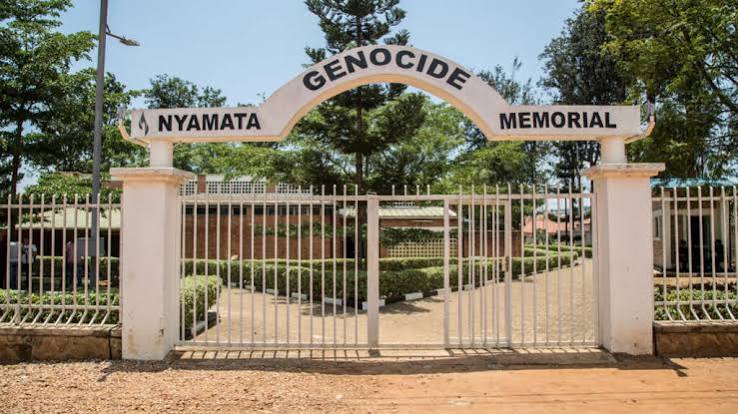
Rwanda has several genocide memorial sites that preserve the memory of victims of the 1994 Genocide against the Tutsi. These sites are important places of remembrance, education and historical documentation. They are different from conventional tourist attractions: visitors are expected to approach them respectfully and allow time to understand the history presented.
Rwanda has six national genocide memorials: Kigali, Murambi, Nyamata, Ntarama, Bisesero and Nyarubuye.
1. Kigali Genocide Memorial
Located in Gisozi, Kigali, the Kigali Genocide Memorial is the country’s principal memorial and one of the most important places for learning about the genocide.
The memorial is the final resting place of more than 250,000 victims. Its exhibitions explain Rwanda’s history before 1994, the genocide itself and the country’s subsequent efforts toward justice, reconciliation and renewal.
The memorial includes several permanent exhibitions. One focuses specifically on the Genocide against the Tutsi, while another examines genocidal violence internationally. There is also a children’s memorial that presents the lives of children who were killed.
Visitors can also see the Wall of Names, memorial gardens, Flame of Remembrance and mass graves. The site houses the Genocide Archive of Rwanda, which preserves testimonies, photographs, documents and other historical material.
The memorial is approximately ten minutes by car from central Kigali. The official visitor guidance recommends allowing at least 1½ hours for a visit.
2. Nyamata Genocide Memorial
Nyamata is located in Rwanda’s Bugesera District, south of Kigali.
The memorial is particularly significant because it is located at a former church where thousands of people sought refuge during the genocide. The site preserves the church and associated evidence of what happened there.
For visitors, Nyamata provides a more localized perspective on the genocide. Rather than presenting only a national history, it helps illustrate how violence affected individual communities.
Nyamata can be visited as part of a historical tour from Kigali, particularly when combined with Ntarama.
3. Ntarama Genocide Memorial
Ntarama is also located in Bugesera District and is another former church site associated with the genocide.
People sought sanctuary at the church, but the site became a place of mass killing. Today, the former church has been preserved as a memorial.
The visit can be emotionally difficult because the site contains physical reminders of the victims and events that occurred there. Visitors should therefore approach it as a place of remembrance rather than simply another sightseeing stop.
Nyamata and Ntarama are often visited together because of their geographical proximity.
4. Murambi Genocide Memorial
The Murambi Genocide Memorial is located in the Southern Province near Nyamagabe.
It is one of Rwanda’s most significant memorial sites because of the scale of the killings that occurred there. During the genocide, people were encouraged to seek refuge at the site of what was then a technical school.
The school complex became a killing site, and today parts of the complex form the memorial.
Murambi is known for its preserved exhibits, including rooms containing remains of victims. This makes it one of the most emotionally difficult memorials to visit.
For travelers, Murambi can be incorporated into a journey toward Nyungwe National Park, making it particularly relevant to visitors traveling through southern Rwanda.
5. Bisesero Genocide Memorial
The Bisesero Genocide Memorial is located in the hills of western Rwanda, in the Karongi area.
Bisesero is particularly associated with the resistance of Tutsi communities who attempted to defend themselves against attacks during the genocide.
The memorial sits in a mountainous landscape, and reaching it involves traveling through hilly terrain. The location itself is therefore an important part of the experience.
The site provides an opportunity to learn about both the violence experienced by the local population and the attempts by some people to resist the attacks.
Bisesero can be incorporated into a trip around Lake Kivu and Karongi, although travelers should allow additional time because of the terrain and distance.
6. Nyarubuye Genocide Memorial
Nyarubuye is located in eastern Rwanda near the Tanzanian border.
The memorial is associated with the former Nyarubuye Catholic Church, where many people sought refuge during the genocide.
It provides another example of how churches and other places where people expected to find protection became sites of mass killing.
Nyarubuye is particularly relevant for travelers exploring eastern Rwanda and areas around the Akagera region and Tanzania border.
Important Features of Rwanda’s Memorials
Although each memorial has its own history, they generally serve several purposes:
Remembrance
The memorials provide places where victims can be remembered and honored. Many also contain burial sites.
Historical education
They help visitors understand the history leading to the genocide, the events of 1994 and the consequences that followed.
Preservation of evidence
Some memorials preserve photographs, documents, personal belongings and other evidence connected to victims and survivors.
Survivor testimony
The Kigali Genocide Memorial in particular incorporates survivor and eyewitness testimony into its educational work. The Genocide Archive of Rwanda also preserves testimonies and historical records.
Peace and reconciliation education
The Kigali Genocide Memorial has developed peace and values education around themes including critical thinking, empathy and personal responsibility.
Visiting a Genocide Memorial as a Tourist
A memorial visit should be approached differently from a normal sightseeing excursion.
Visitors should dress respectfully, remain quiet in remembrance areas and follow instructions from staff. At the Kigali Genocide Memorial, visitors are specifically asked not to walk on mass graves, and photography is not permitted inside the museum exhibitions. Outdoor photography is permitted under the site’s guidelines.
It is also worth avoiding rushed visits. Taking time to read the information, listen to testimonies and understand the individual stories gives greater meaning to the experience.
A Good Memorial Route from Kigali
For travelers interested in Rwanda’s history, a possible itinerary is:
Kigali → Nyamata → Ntarama → Kigali
This can be completed as a historical day trip.
For travelers continuing west:
Kigali → Nyamata/Ntarama → Murambi → Nyungwe
And for a Lake Kivu itinerary:
Kigali → Karongi → Bisesero → Lake Kivu
The exact routing should be adjusted according to current road conditions and opening arrangements.
Why These Memorials Matter
Rwanda’s genocide memorials are important because they preserve the memory of people who were killed and provide historical evidence about what happened. They also demonstrate how remembrance has been incorporated into Rwanda’s post-genocide education and reconciliation efforts.
For travelers visiting Rwanda, a memorial visit can provide important historical context for understanding the country today. It should, however, be treated as a serious educational and remembrance experience rather than conventional tourism.
If you are writing a Rwanda tourism article, the Kigali Genocide Memorial, Nyamata, Ntarama, Murambi and Bisesero are particularly useful to discuss because they can be connected to major tourism routes around Kigali, Nyungwe and Lake Kivu